IRS LLC Filing The return follows the election
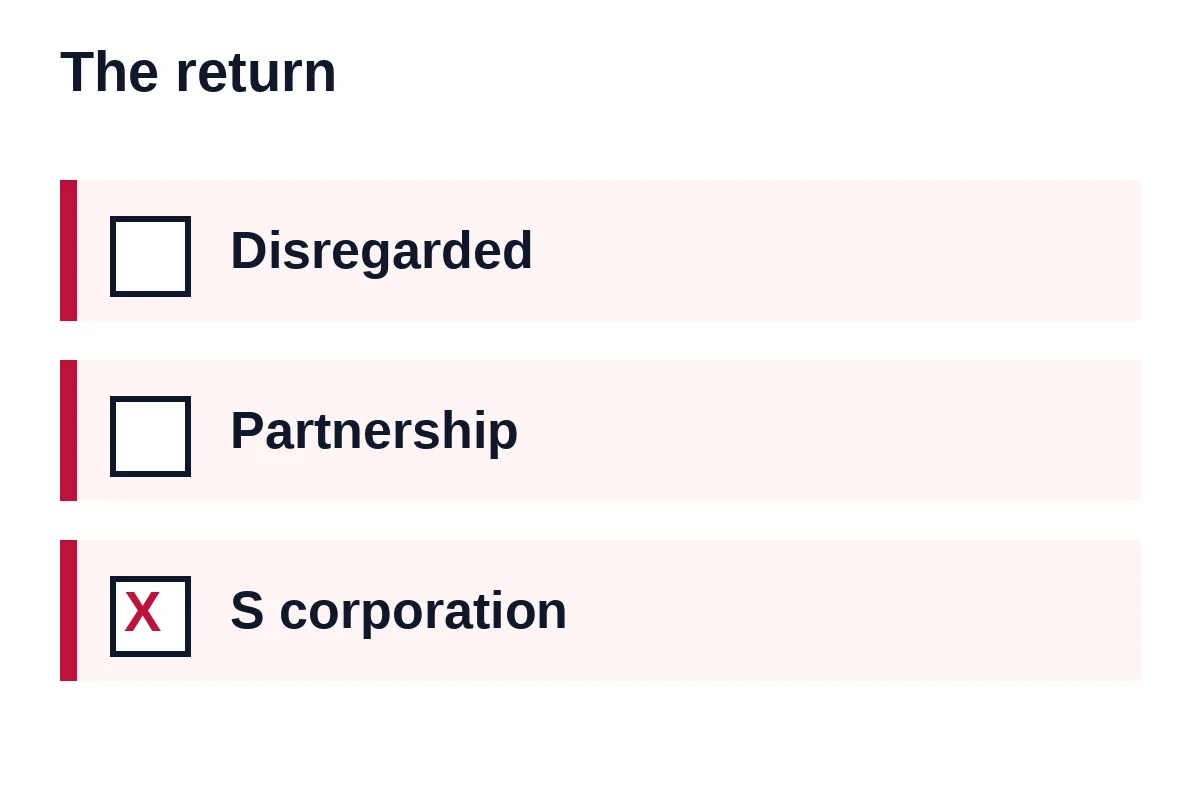
Disregarded, partnership, C, and S do not share a form. The acceptance, or the lack of one, is what picks the return.
Four lives, one certificate
A state certificate creates a company. It does not choose the federal return. A single member who never elected anything is usually disregarded, and the activity lives on the owner's return. Add a second owner, or elect partnership treatment, and a partnership return appears. Elect S and, once the acceptance exists, a company return appears with a schedule that still touches the personal return. Elect C and the company return is a different animal, with its own tax.
People arrive with a dropdown from a bank that mashed those lives into one label. We pull the label apart. The certificate is one paper. The acceptance is another. The return is a third. Until those three agree, a fee for 'the LLC return' is a guess.
When the personal return and the company part ways
A plain version of a problem we see: someone says the company is an S, and the personal return shows the profit with no company form beside it. Either the company return was never filed, or the profit was reported in the wrong place. Both are worth a calm hour. Neither is solved by reprinting the certificate.
The other direction happens too. A company return exists, and the personal return never picked up the schedule. The date on the company acknowledgment does not finish the personal year. We read both before we tell you the year is complete.
Wages belong in this conversation only after the election is real. Above certain income levels a deduction tied to qualified business income can shrink when the company pays no wages. We will explain that in words, without a worksheet on the website. If wages are the right next step, we set payroll up on a provider you run. We do not run the payday, and we do not set it up before the acceptance is in the folder.
The same street, two returns
Two companies on the same street can hold the same kind of certificate and still owe different returns. The election is the difference, not the sign on the door. We can picture the noise of a Friday close and still ask which form the year actually requires. Say which years.
If the election changed during the year, say so, and name the years. Two packets may be owed, each with its own date. We would rather see two short lists than one blended file.
October, while a choice can still move
Some elections have a clock. We will not invent a deadline on this page. We will tell you, on a call, whether the year in front of you can still be changed, and we will say when the honest answer is that the year is already locked. A closed month in October is what makes that answer specific instead of hopeful.
The books, the statements, and the return then line up under the name the acceptance already gave the company. We ask which years the acceptance covers before any fee is named, because a change in the middle of a year can leave two returns on the table. That is the quiet version of this work, and it is the one we are aiming at. Say which years the acceptance covers.
Keep reading.
Name the election you think you have
Say disregarded, partnership, C, S, or not sure. Not sure is useful.
You will be talking to the Steven Palmieri practice.